Structures Designed Around Actual Use Requirements
Custom Metal Building Construction in Etoile for properties needing storage, workshop, or commercial space
Metal building systems provide versatile structures for residential storage, workshop operations, and commercial applications where conventional wood-frame construction costs more and requires more maintenance over time. The process involves planning building dimensions and door configurations based on what you intend to store or how you will use the interior space, then managing site preparation, foundation work, erection, and finishing services under one contractor. Gen-Rev Construction handles custom metal building projects throughout rural East Texas properties where structures must accommodate equipment storage, agricultural operations, or business facilities.
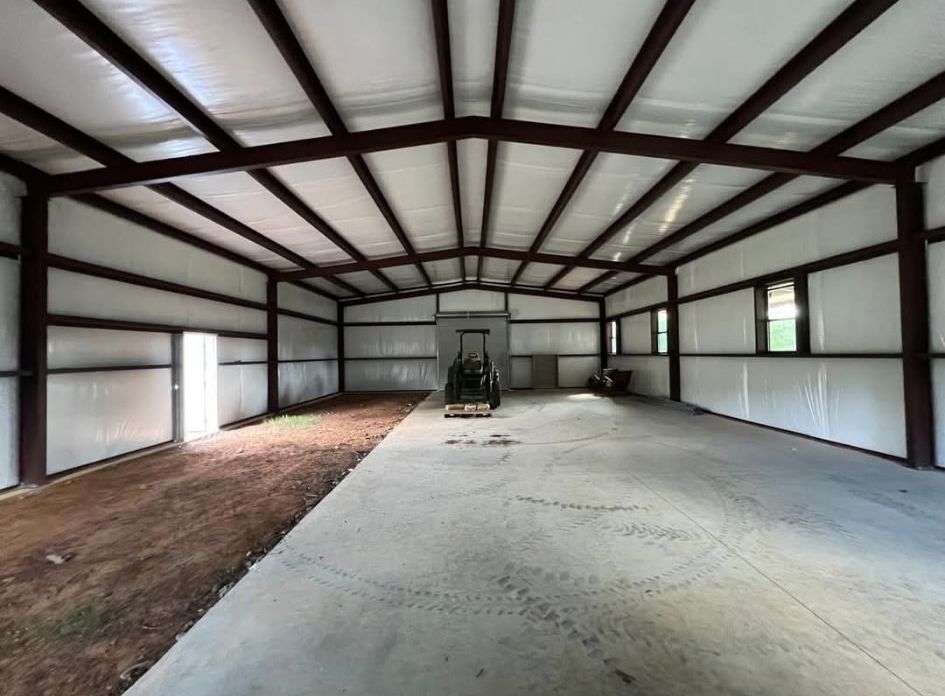
Construction begins with site evaluation to determine grading requirements, foundation type based on soil conditions and building size, and placement that allows vehicle access while meeting setback requirements. Metal building systems use engineered frames that span longer distances without interior columns compared to wood framing, which matters when you need unobstructed floor space for maneuvering equipment or organizing large items.
Contact us for project planning and detailed estimates based on your intended building use and site conditions.
What Complete Project Management Includes
The construction sequence includes excavation and foundation preparation, anchor bolt installation to manufacturer specifications, frame erection using proper bracing during assembly, and panel attachment that creates weather-tight seams. Finishing work addresses trim installation around openings, gutter and downspout placement for water management, and any interior insulation or wall finishing you specify for climate control or appearance.
After completion, you have a structure with clear-span interior space, roof slopes that shed water and debris, and overhead door openings sized for your specific equipment or vehicle dimensions. The galvanized or coated metal panels resist corrosion from humidity and weather exposure common in this region, and engineered connections handle wind loads without the gradual fastener loosening that affects some wood-framed buildings.
Building codes in rural areas may differ from municipal requirements, though engineered metal buildings typically include stamped drawings that address structural loads and wind ratings. Electrical and plumbing rough-in must occur before interior finishing if you plan conditioned space or operational facilities. Foundation choices range from gravel with treated wood sill plates for smaller buildings to reinforced concrete slabs for structures supporting heavy equipment or requiring smooth floor surfaces.
Common Questions About This Service
Metal building projects raise questions about customization options, durability factors, and construction timelines that affect planning and budgets.
What determines the foundation type for a metal building?
Building size, intended use, and soil conditions determine whether you need a gravel pad with pier footings, a perimeter foundation with interior gravel, or a full concrete slab, with heavier equipment or finished interior spaces typically requiring slab foundations for stability and usability.
How does building design affect long-term maintenance?
Roof pitch determines how quickly debris sheds and how much standing water remains after rain, while gutter sizing affects whether runoff erodes soil around the foundation or splashes back onto lower wall panels.
When does construction proceed most efficiently?
Site work and foundation placement work best during dry periods when soil compaction reaches specified density, while frame erection can proceed year-round once the foundation cures, though high wind days require delays for safety during panel installation.
What customization options affect building functionality?
Walk door locations, window placement for natural light, overhead door sizes, and insulation packages all change how the building functions for your specific use, with agricultural applications often prioritizing ventilation while workshop spaces emphasize insulation and electrical service capacity.
How do East Texas weather conditions influence building specifications?
Wind ratings account for storm exposure in open rural areas, and roof panel profiles vary in their resistance to wind-driven rain, with taller buildings or those in exposed locations requiring upgraded fastener schedules and reinforced framing at corners and openings.
Gen-Rev Construction discusses building layout, door configurations, and site preparation requirements based on how you plan to use the structure. Reach out to begin project planning and receive construction estimates tailored to your property and intended application.